Here’s a letter to a Facebook friend.
Keith:
Thanks for sending along Oren Cass’s and Daniel Kishi’s attempt to rationalize Trump’s punitive taxes – a.k.a. tariffs – on Americans’ purchases of imports. As you realize, their essay is filled with several fallacies, both factual and theoretical.
Let me address here the fallacy that you explicitly highlight, which is revealed in these two passages meant to justify Trump’s new rationale for raising tariffs on imports from countries that allegedly do too little to combat “forced labor”:
Capital moves not to where labor is most productive but to where it is most easily exploited. Cheap labor paid in proportion to its output is just unproductive labor; what the capitalists want is productive workers they can still pay poorly….
The new forced-labor tariffs are the leading edge of a larger ambition: a trade policy that makes capital compete on how productively it employs workers, not on how easily it can exploit them, and that restores a level playing field for Americans.
In other words, the Trump administration’s new tariffs, we are to believe, are an attempt not merely to reverse the pattern of global capital going to countries where worker productivity is high but worker pay is low, but also to ensure that more of that capital moves to the U.S. where it will employ American workers.
Overlook the fact that increasing the amount of foreign capital invested in the U.S. would increase U.S. trade deficits – the same deficits that both Oren and the president often bemoan. That Oren and Mr. Kishi seemingly are unaware of this contradiction is reason enough to dismiss their brief for the tariffs.
Instead, note that their tale is contradicted by facts.
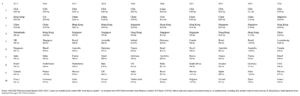
In all but one of the ten years 2015 through 2024, the country that received the largest amount of foreign-direct-investment capital is the United States. (The U.S. ranked second in the pandemic year of 2020, receiving slightly less FDI than China.) Over that ten-year period, the U.S. received a total of $2.95 trillion in FDI, which is twice the amount receive by second-place China, and 20% of all FDI.
Further, as examination of the top-ten recipients of FDI reveals (see attached), nearly all of these countries – places such as Canada, the U.K., France, Germany, and the Netherlands – are wealthy, high-wage countries.
The U.S.’s #1 position isn’t unique to those ten years. Over the 50-year period since the U.S. began running annual trade deficits (in the mid-1970s), the country that received the most FDI is the U.S. By far. Its 20% to 25% percent of all FDI over this half-century is at least double the amount of FDI received during those years by the country that received the second largest amount of FDI, the U.K.*
These data are neither esoteric nor difficult to access. And they refute, as surely as economic data can refute any claim, Oren’s and Mr. Kishi’s assertion that global capital has been avoiding the U.S. and other high-wage countries in order to take advantage of low-wage “forced labor.”
Sincerely,
Don* Data gathered, with Claude’s help, from various issues of UNCTAD’s World Investment Report.