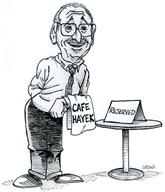
… is from pages 139-140 of the 2009 Revised Edition of Thomas Sowell’s Applied Economics: Thinking Beyond Stage One:
The incentives of a government agency are very different from those of a family or an insurance company. As a matter of financial self-protection, both families and insurance companies must seek to discourage risky behavior in one way or another. For a government agency, however, financed by taxpayers’ money, there is no such urgency about discouraging the increased risks that people may take when those risks are covered by others. Moreover, the agency gets its biggest political support from helping those suffering the consequences of the risks they have taken, however unwisely, not by criticizing them. Thus government emergency programs help people struck by floods, hurricanes, and other natural disasters make it easier for people whose homes have been destroyed to rebuild at the same locations, in areas where such disasters recur regularly over the years.