≡ Menu

Quotation of the Day…

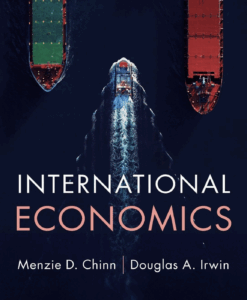
is from page 11 of Menzie Chinn’s and Douglas Irwin’s superb 2025 textbook, International Economics:

There is a parable about an entrepreneur who invents an amazing machine. Wheat, soybeans, lumber, and oil are fed into one end of the contraption. As if by magic, smartphones, coffee, and tea, and all manner of clothing and apparel come out at the other end. The inventor is praised as a genius – until further investigation reveals that the wheat and the other inputs were being secretly shipped to other countries in exchange for the electronics and apparel that later emerged. When this news is made public, the inventor is denounced as an unpatriotic fraud who is destroying jobs.

DBx: Here are some questions for all protectionists, left, right, and center (and please disregard national-security issues as these questions concerning such a hypothetical machine are about its economic consequences). Do you think that if such a machine were indeed invented, the results for the people of the home country would be bad? Do you think that government officials should be trusted to know if and when to obstruct the operation of such a machine? If you would admire the genius of the inventor of this machine and applaud its ability to transform lower-valued inputs into much higher-valued outputs, can you explain why you object to the operation of an actual such real-world machine, like the one pictured beneath the fold?

[continue reading…]

{ 0 comments }

Trump Is Mistaken About the Value of the Dollar

Here’s a letter to a long-time correspondent.

Rick:

Thanks for sharing John Tamny’s piece on the dollar. Tamny is right that Trump is wrong to insist that Americans would “make a helluva a lot more money with a weaker dollar.” This claim by Trump is one of countless that reveals the president’s ignorance of basic economics. Here’s how I explain the flaw in this Trumpian ‘reasoning.’

When I was a kid, my elementary school – Immaculate Conception School – held semi-annual fairs. At these fairs we students bought tickets that we then exchanged for food, trinkets, and game-playing offered for sale at the fair’s many booths. Of course, some items cost more than others. A stuffed bear might be priced at, say, 30 tickets, popcorn at 3 tickets, and a pencil with the school logo at 1 ticket.

To purchase anything at the fair, we needed those tickets; we couldn’t spend dollars directly at any of the fair’s booths. And so using currency (dollars) that we brought from home, each of us students bought as many or as few tickets as we pleased (or, rather, as many tickets as our parents allowed us to buy). Tickets in hand, we then entered the fairgrounds to spend them on whatever goodies caught our fancies.

The purpose of these fairs, obviously, was to raise money for the school. I’m sure that the school’s principal, Sister Quentin, wished to raise as much money as possible.

But suppose that Sister Quentin reasoned like Pres. Trump: the school (so goes the supposition) raises more revenue the greater the quantity of things students buy at the fair; students will buy a greater quantity of things at the fair the lower is the price – the official value – of the tickets used to buy things at the fair; therefore, the official value of these tickets should be set very low to encourage students to buy lots of them.

Sister Quentin triumphantly concludes that by keeping the price of tickets especially low – that is, by devaluing the tickets – the school ensures that the volume of fair sales will be especially high and the school thereby enriched.

The flaw in Sister Quentin’s devaluation scheme is obvious: if the price of tickets is set below a level that enables the school to cover its costs of acquiring the goods and services sold at the fair, the school loses money. While Sister Quentin’s undervaluation of the tickets will indeed increase the quantity of things sold at the fair (as long as prices expressed in tickets do not rise), it results in the school transferring economic value to the fair’s customers rather than the school getting net economic value from those customers.

If the official value of the dollar is pushed below its market value, we Americans will be made poorer, not richer – a reality that is impervious to Trump’s obstinate economic ignorance.

Sincerely,
Don

{ 0 comments }

Some Links

In today’s Wall Street Journal, my former classmate and old friend Roger Koppl decries the European Union’s hostility to freedom of expression. A slice:

‘The lamps are going out all over Europe; we shall not see them lit again in our lifetime.” The words British Foreign Secretary Edward Grey spoke on the eve of World War I ring true a century later. But now gloom descends on Europe not from impending war but from its own institutions as an anti-Russian sanctions regime upends the rule of law.

On Dec. 15, the European Union added Jacques Baud, a retired Swiss army colonel and former intelligence analyst who lives in Brussels, to its sanctions list. His offense: appearing on media outlets Brussels dislikes and promoting what the EU calls “pro-Russian propaganda.” The official listing cites his (implausible) claim that Ukraine orchestrated its own invasion to accelerate North Atlantic Treaty Organization membership—which the EU labels a “conspiracy theory.”

Sanctions are designed to target state actors and their agents, yet Mr. Baud isn’t accused of being a Russian agent. No one has presented evidence of Moscow funding. He’s a private citizen who wrote books and gave interviews critical of Western policy on Ukraine. For that, the bloc has restricted his travel across its 27 countries and frozen all of his “funds and economic resources” in the EU, effectively prohibiting him from doing business there. All without a trial.

The rule of law requires that clear limits bind the government such that people can foresee how a state will use its legal authority and plan their lives accordingly. It requires limiting officials’ discretionary power to punish arbitrarily.

The EU’s sanctions flout both principles.

Also decrying the destruction of free speech in the E.U. and in the U.K. is Greg Lukianoff. A slice:

Free-speech advocates have long warned Americans about the dangers of adopting “hate speech” codes. If they became widely enforced, the result wouldn’t be the kinder society intended by such censorship; it would be an intimidated, even frightened one. Either you engage in mass arrests, or you enforce the rules selectively — which means targeting some viewpoints above others.

For an indication of where this censorious impulse can lead even in a democratic society, look no further than European Union nations and Britain, where the experiment in speech control is running not on university campuses but on national scales, backed by the state’s monopoly on force. The results are so extreme that American readers might assume they’re exaggerated. They aren’t.

Start with Britain, where “grossly offensive” communications can be a police matter. In 2023, British police made more than 12,000 arrests under two communications statutes. For comparison, during America’s first Red Scare, from 1919 to 1920, one of the worst crackdowns on speech in the nation’s history, the United States averaged about 2,000 arrests per year, when the U.S. population was more than 50 percent bigger than Britain’s today.

Behind the numbers are stories like that of Elizabeth Kinney, a mother of four who was arrested for having called a man who assaulted her a homophobic slur — not to his face, but in a private message to a friend. After the two fell out, the now former friend sent the messages to law enforcement. Kinney’s attacker wasn’t punished, but she was, under the Malicious Communications Act. Told she potentially faced 10 years in prison, Kinney pleaded guilty. She was sentenced to the British equivalent of probation and community service, and fined the equivalent of nearly $500.

With 21st-century Venezuela as his apt example, GMU Econ Paul Mueller explains what shouldn’t – but, alas, what today nevertheless does – need explaining: socialism, entitlement, and tyranny are connected to each other.

My Mecatus Center colleague Jack Salmon exposes what Gabriel Zucman “gets wrong about Venezuela.”

Raid or trade: Reason‘s Eric Boehm points out that “Trump wants to invade Greenland because he doesn’t understand trade.” Two slices:

Imagine for a moment that you have the misfortune to be elected president of some nation. A neighboring nation possesses valuable natural resources that you’d like to have. How to proceed?

You could seize those resources by force. Certainly that’s been a common method across much of human history. Hire some thugs to take what you want. Have them beat up the other guy if he gets in the way. Give your thugs uniforms and an internal hierarchy, and you might fool some people into believing the whole thing is more legitimate.

Alternatively, you could offer the other nation some of your own resources in exchange for the ones you want. Things go even more smoothly if you let the people in your country offer their resources in exchange for the stuff in the other country that they want. If you happen to be president of a country with the world’s reserve currency, this deal gets better yet: Instead of offering your own resources, your people can probably just trade money for the things they want, and the other country will be happy to accept.

Unfortunately, President Donald Trump does not seem to understand this on a fundamental level. Again and again, Trump has shown that he views free trade as a suckers game. Why should everyone end up better off when he could win while others lose?

The Trump administration’s renewed impulse to seize Greenland—on the heels of a military attack aimed at seizing Venezuelan oil production—is the latest example of this. It’s also perhaps the riskiest, given that Greenland is a part of Denmark (even though it has been semiautonomous since 1979) and Denmark is a member of NATO.

…..

Again, one of the glorious things about free trade is that no one points a gun (or the whole U.S. military’s terrifying arsenal) at you to make a deal happen. Individuals buy and sell things when and how it makes sense for them to do it. Yes, it is impossible to apply that logic to every aspect of international geopolitics, but presidents ought to nudge the world toward more trade and less war whenever possible. Trump is doing the opposite.

That is happening, at least in part, because Trump doesn’t understand the value of free trade. Everything happening with Greenland is downstream of that grievous problem.

Mike Munger tweets: (HT Scott Lincicome)

No sensible person EVER claimed tariffs cause “inflation.”

Inflation is always and everywhere a monetary phenomenon.

Tariffs cause enormous, and expanding, distortions in RELATIVE prices. That is literally their purpose.

Stephen J. Rose and Scott Winship report that the American middle class is indeed shrinking – by entering the upper-income classes. A slice:

By our definitions, using contemporary benchmarks, 36 percent of American families composed the core middle class in 1979, while just over half (54 percent) fell short of core middle-class status and only 11 percent received income that placed them above the core middle class. By 2024, the core middle class had indeed shrunk — to 31 percent of American families. But the better-off set had tripled in size, while the worse-off group had shrunk dramatically. For the first time in American history, more families in 2024 were above the core middle class threshold (35 percent) than below it (34 percent). If we combine the lower-, core, and upper-middle classes, their share of families has risen from 70 percent to 78 percent since 1979.

And Gale Pooley makes clear that the real prices of groceries in the U.S. have fallen significantly over the past 35 years.

{ 0 comments }

Quotation of the Day…

… is from page 278 of Amar Bhidé’s superb 2008 book, The Venturesome Economy:

There may still be some advantages in locating manufacturing close to the R&D or design center where a product originates; but this is just one of the many factors that influence the design of what is now called the “supply chain.” Usually, other considerations – such as wage rates of production workers, tax regimes, proximity to markets, supplier networks, and complements – dictate that much of the manufacturing takes place in locations far removed from where the technology originates.

{ 0 comments }

Some Links

Scott Lincicome and Alfredo Carrillo Obregon call out the Trump administration for its absurdly exaggerated assertions about how much revenue is being reaped by the tariffs U.S. government’s punitive taxes on Americans’ purchases of imports. A slice:

If we learned (or confirmed) something in 2025, it’s that the president and his cabinet believe in US tariff policy as the solution to every conceivable problem. Hence, 2026 will almost certainly bring more (fantastical) proposals for funding new federal programs and policies through tariff revenue.

Ryan Bourne argues that Mayor Mamdani’s clueless promise of “the warmth of collectivism” was no slip of Hizzoner’s inaugural-day tongue. A slice:

“Collectivism” is not a slip of the tongue or a vague moral appeal to kindness. It is a loaded ideological term with a long, well-documented pedigree and an even longer rap sheet.

By collectivism, political theorists and its own champions have meant a social order in which the claims of the group—often defined and enforced by the state—override individual choice, property rights, and voluntary exchange. Production and distribution are guided not by prices and consent but by political priorities, and individual autonomy is tolerated only insofar as it serves collective ends. That is not a caricature; it is the standard definition of what’s espoused in fascist, socialist, and communist literature.

The word’s lineage matters. Zohran Mamdani is consciously drawing on a tradition that stretches from Karl Marx, who rejected “bourgeois individualism” in favor of collective ownership, through Vladimir Lenin, who implemented it via one-party rule, to Joseph Stalin and Mao Zedong, who enforced it at colossal human cost. Even outside the communist tradition, collectivism was proudly embraced by Benito Mussolini, who defined fascism as the negation of individualism in favor of the state as an ethical whole, and by strongmen such as Idi Amin, who expelled ethnic minorities and appropriated their land in the name of the national good.

The historical record is not ambiguous. Where collectivism has moved from rhetoric to reality, the results have been grim. The Soviet Union’s collectivized agriculture led to chronic shortages and mass famine through both disastrous economic policies and by design to suppress dissent. China’s Great Leap Forward killed tens of millions. Cambodia’s agrarian collectivism under Pol Pot destroyed a quarter of the population, resulting in the “killing fields” and perhaps the most brutal regime in modern history. In each case, politics replaced price signals, error correction was treated as dissent, and individuals weren’t free to exit the collective.

Wall Street Journal columnist William McGurn is correct:

In the understatement of the year, the [New York] Times admitted that the Democratic Socialists’ biggest challenge may have nothing to do with Donald Trump or Zohran Mamdani but with socialism itself: “Some of its policies,” says the paper, “even if pursued, may not work.”

The Editorial Board of the Wall Street Journal rightly defends Sen. Mark Kelly (D-AZ) against Pete Hegseth’s charge that he is guilty of sedition. A slice:

Telling officers not to obey illegal orders is a truism, not a “seditious” statement. As a sitting Senator, Mr. Kelly deserves particular leeway on political speech notwithstanding his continuing military status.

GMU alum Tom Savidge explains that “Medicaid’s structure actually invites waste and fraud.”

Timothy Taylor reports on new research that finds that, in Taylor’s words, “economic inequality does not cause lower subjective ratings of well-being.”

{ 0 comments }

Quotation of the Day…

is from page 3 of Menzie Chinn’s and Douglas Irwin’s superb 2025 textbook, International Economics [original emphases]:

Or think about your smart phone. Where was it made? The back of an iPhone will tell you that it was designed in California and assembled in China. However, in that process, hundreds of individual parts were sourced from all around the world. The flash memory came from Toshiba in Japan, the application processor was supplied by Samsung in South Korea, the camera module was put together by Infineon in Germany, and the Bluetooth hardware came from Broadcom in the United States. The cost of assembling all of the components sourced from around the globe is a small fraction of the total cost of the phone.

DBx: Indeed so.

And yet Pres. Trump, Commerce secretary Howard Lutnick, and their fellow American protectionists would have you believe that we Americans are being “ripped off” by economic forces that, as these forces direct (and pay!) us to do the high-value-added tasks involved in producing smartphones, assign to lower-productivity, lower-wage workers in poorer countries the menial tasks of snapping all of these component parts together.

{ 0 comments }

Oh, Look Who’s Paying Trump’s Tariffs

Emeritus University of Tennessee economist Harold Black sent the following email to me this morning. I share it here with his kind permission.

Morning Don, Today I read your open letter to the president and this notice from ebay: “Due to US Customs policies, you will need to pay import fees for this order to the shipping carrier prior to delivery.” I thought the president said that the exporter paid the duty so should I refuse delivery because there must have been some mistake in that they want me to pay it?
All the best,
Harold

{ 0 comments }

Some Links

Roger Pielke, Jr., reports this great news: “Globally, 2025 has had one of the lowest annual death ratesa from disasters associated with extreme weather events in recorded history.” A slice:

What we can say with some greater confidence is that the death rate from extreme weather events is the lowest ever at less than 0.8 deaths per 1,000,000 people (with population data from the United Nations). Only 2018 and 2015 are close.

To put the death rate into perspective, consider that:

  • in 1960 it was >320 per 1,000,000;
  • in 1970, >80;
  • in 1980, ~3;
  • in 1990, ~1.3;

Since 2000, six years have occurred with <1.0 deaths per 1,000,000 people, all since 2014. From 1970 to 2025 the death rate dropped by two orders of magnitude. This is an incredible story of human ingenuity and progress.

To be sure, there is some luck involved as large losses of life are still possible — For instance, 2008 saw almost 150,000 deaths and a death rate of ~21 per 1,000,000. Large casualty events remain a risk that requires our constant attention and preparation.

But make no mistake, 2025 is not unique, but part of a much longer-term trend of reduced vulnerability and improved preparation for extreme events. Underlying this trend lies the successful application of science, technology, and policy in a world that has grown much wealthier and thus far better equipped to protect people when, inevitably, extreme events do occur.

Wall Street Journal columnist Allysia Finley argues that “the scandal of American welfare goes beyond fraud.” Two slices:

Economist John Maynard Keynes suggested that the government pay people to dig holes in the ground and then fill them up. This is an apt metaphor for progressive government these days: It creates social dysfunction, then shovels out money to correct it. Dredge, fill and repeat.

…..

The goal of the welfare-industrial complex isn’t to ameliorate social problems but to extract more money from the government. Social workers employed by a nonprofit—funded by hospitals and health insurers—spent recent weeks searching for undocumented immigrants to sign up for Medicaid before a deadline that would make them ineligible.

A story in the Atlantic this fall described how drug addicts and the mentally ill have been cycling in and out of California hospitals. Every emergency-room visit, typically covered by Medicaid, means more money for hospitals. It’s no coincidence that hospitals are the loudest opponents of Medicaid reforms.

California’s Medicaid spending—which pays for Native American exorcisms, music lessons, cooking classes and many other nonmedical services—has ballooned by nearly 50% over the last two years. “Healthy living starts with a chef in your kitchen. Paid by Medi-Cal,” one company advertises. A state audit last month flagged it as high risk for fraud, waste and abuse. You don’t say.

Say this for a union-backed ballot measure that aims to tax the wealth of billionaires to boost spending on Medicaid: It might awaken wealthy liberals to the welfare racket that masquerades as a public service.

GMU Scalia Law’s Ilya Somin offers sensible thoughts on the “capture of Maduro and Trump’s attack on Venezuela.”

Max Skjönsberg reflects productively on F.W. Maitland’s productive reflections on Adam Smith and trade. A slice:

Smith’s still valid argument for free trade was more skeptical and levelheaded than Bastiat’s theory of harmonious interests. In Maitland’s interpretation, Smith’s main point was that government interference failed to achieve the desired results, partly because of rent-seeking, but also because of the government’s inevitable lack of sufficient information (a view we more often associate with Hayek). Smith’s real service had thus been to show that government meddling with trade had been futile or even hurtful. His followers in the nineteenth century extended this insight to government interference in general. According to Maitland, this position was more solidly grounded in the limited knowledge of political leaders rather than the harmony of interests.

Maitland was sympathetic to the principle of what he called laissez-faire, as long as it did not rest on any notion of harmonious interests. In this way, he connected his discussion of economic policy with religious politics. “Religion and commerce seem ideas widely removed from each other, but yet in the eye of the statesman they have points in common,” he wrote. First, laws regulating commerce and religion were often futile, as it is too easy to smuggle goods as well as express forbidden opinions. Second, interference on the wrong side can produce the worst effects, by causing starvation or preventing the spread of truth. Third, it is very likely that government interference will be mistaken because of the lack of knowledge. Maitland concluded: “The most convincing pleas for laisser faire, and the most convincing pleas for religious toleration, are those which insist a priori on the great ‘probable error’ of any opinions on matters of religion, and matters of political economy, and those which relate a posteriori the history of the well-intentioned failures of wise and good men.”

Many of these arguments later became key to Hayek’s critique of central planning. Hayek was clear that individuals have diverse and often competing aims, which means that interests frequently clash. For Hayek, diverse interests could be best coordinated via the price system, whereby various actors communicate and reach compromises. The price system, rather than government interference, is the proper mechanism for coordinating competing interests, because of the impossibility of government officials possessing enough information to organize the different parts of the economy effectively. The emphasis on the coordination of clashing interests rather than natural harmony is also arguably a more fruitful way of understanding The Wealth of Nations. Maitland’s reading of Smith thus helps us to disentangle the more realistic elements from the utopian strands of the classical liberal tradition.

Here’s the abstract of a new paper by Viral Acharya and Toomas Laarits (emphasis added): (HT Scott Lincicome)

We explain how the “Tariff War” shock of April 2025 affected the safe-asset status of US Treasuries. Convenience yield erosion for long bonds is consistent with a reduction in the hedging property, reflected in a rising stock-bond covariance. Decomposing the Treasury yield into risk-free rate, credit spread, and convenience yield components reveals that covariance due to the convenience yield component increased for long bonds. The short end of the Treasury curve, however, continued to exhibit the safe-asset hedging property. These effects are consistent with a withdrawal of safe-asset investors from long-term Treasuries and a rotation towards shorter-term Treasuries and gold.

Mitchell Bahnsen is correct: “The threat to the modern media landscape isn’t Netflix or Paramount — it’s regulation that protects incumbents and strangles competition.” A slice:

As free markets come under fire from the political right as well as the left, it has become fashionable in Washington to be suspicious of mergers that could reduce competition, thereby leading to higher prices, fewer options for consumers, and weaker incentives to innovate. In the media sector, it is argued that vertical integration — unified control of content’s production and distribution — risks creating barriers to entry for smaller studios or streaming platforms. This would allow dominant firms to dictate terms to filmmakers, theaters, or talent agencies. Critics also argue that large, oligopolistic media firms would be risk-averse, relying on existing franchises instead of backing new creators. Even if they do innovate, it may be more defensive or incremental relative to the disruptive creativity of newer entrants.

The problem with such criticisms is that, for the most part, they assume that the media market is static and unchanging. That is an assumption that overlooks how quickly the marketplace can change, an odd thing to disregard given how rapidly the rise of streaming services like Netflix disrupted traditional entertainment media. The same dynamism that restructured the entire media landscape over the course of 15 years can also uproot a large corporation’s market share, even after an acquisition that makes it appear “too big to fail.”

The Austrian political economist Joseph Schumpeter famously argued that one of the components of an effectively functioning capitalist system is capitalism as creative destruction, the process by which a new product or service — or even a whole way of business — can disrupt an entire industry based only on what best meets the consumer’s needs. It is a common phenomenon, as markets are reorganized through waves of disruption, old business models collapse, and new industrial configurations emerge. The rise of streaming and the associated decline of legacy television, cable, and moviegoing are the result of technological innovations that consumers preferred over their predecessors.

Mergers are typically the response to such market changes, not the cause of them. Preventing consolidation could freeze industries rather than allowing them to transform, while the strengthened market power or even “temporary monopoly” that mergers create can encourage innovation from challengers, not the reverse. As Schumpeter points out, “In capitalist reality as distinguished from its textbook picture, it is not the large firms that hamper progress. . . . On the contrary, they are the most powerful engine of progress . . . because they are in a position to finance innovation on a large scale and because they have something to lose: the gains from temporary monopoly.”

Mark Perry remembers that “the ‘warmth’ of collectivism in East Germany was so intense that they had to build a wall to contain it.”


{ 0 comments }

Quotation of the Day…

… is from page 152 of Thomas Sowell’s Compassion Versus Guilt, a 1987 collection of some of his popular essays; specifically, it’s from Sowell’s June 14th, 1985, column titled “Chances versus Guarantees”:

People who bought homes in a quiet little town often become resentful when other people begin moving in, expanding and changing the community. They pass laws depriving other people of the right to buy and sell property freely. The excuse for depriving other people of their rights is that the people who were there first came to enjoy an atmosphere and lifestyle that will no longer be the same if they can’t keep others out.


What the original people paid for when they moved in was a chance for a particular way of life – not a guarantee. If they wanted a guarantee, they would have had to buy up the surrounding property as well. Instead, they go into court to get a guarantee free of charge.

American laws call for equal treatment and property rights. Yet people who happen to have been in town first are treated as more equal than others. Judges wave aside both the equal-treatment principle and property rights, in order to transform the chances that were originally bought into permanent guarantees. From an economic point of view, it’s the same as if judges declared that everyone who bought a raffle ticket [for a chance to win a car] is entitled to a car.

DBx: Profound and important.

Notice that the same principle applies to jobs. When protectionists plead for high tariffs to protect the existing jobs of particular workers, they plead for transforming workers’ ‘purchase’ of a chance not to lose those jobs into a guarantee – a guarantee paid for by fellow citizens in the form of higher prices for goods and services, as well as lost economic opportunities. The workers for whom protectionism is demanded could, after all, greatly increase their chances of keeping their current jobs by paying to do so – specifically, by taking wage cuts or by working harder with no corresponding increase in pay. But, obviously, these workers don’t themselves value the additional job security and non-wage benefits of their existing jobs highly enough to pay for these benefits themselves. These workers, however, are more than happy to have other people pay for these benefits. Protectionism is a means of compelling other people – mostly, fellow citizens – to pay for these benefits.

The core case for protectionism offered by Oren Cass, for example, is pretty much as described above. Ironically, Cass accuses free traders of being narrowly obsessed with money while, in contrast (he says) he and the workers whom he champions have higher, nobler, non-economic goals. But in fact the goals that he and the workers whom he champions have are neither non-economic nor ‘higher.’ The goals they have are not only very much economic (‘keep my job without having to take a pay cut’), they also are greedy in the accurate sense of this term (‘I want other people to pay for the benefits I enjoy but am unwilling myself to pay for; I want to force other people to subsidized my standard of living.’)

{ 0 comments }

Another Open Letter to Tariff Man

Mr. Donald J. Trump
President, Executive Branch
United States Government
1600 Pennsylvania Ave., NW
Washington, DC 20500

Mr. Trump:

On New Year’s Eve your office released a “Fact Sheet” stating that you “imposed reciprocal tariffs to take back America’s economic sovereignty, address nonreciprocal trade relationships that threaten our economic and national security, and to remedy the consequences of nonreciprocal trade.”

Two things.

First, by its nature, all trade is reciprocal. Each party gives something to the other party and receives in exchange something that each party values more highly. Therefore, your punitive taxes – a.k.a. tariffs – on Americans’ purchases of imports are aimed at correcting a problem that doesn’t exist.

Your only possible retort that would retain as much as a tenuous connection to logic would be to insist that foreigners regularly dupe us Americans into buying things that we don’t want to buy – that is, to insist that we Americans are incurably stupid at conducting our own economic affairs, while foreigners are so astonishingly clever that they routinely swindle us out of our own money. Do you, sir, really believe that your fellow Americans are generally the intellectual inferiors of foreigners?

Second, by obstructing each of your fellow Americans’ voluntary, peaceful trades with foreigners you diminish the economic sovereignty of each and every one of us. What (il)logic leads you to conclude that by obstructing – with your taxes on our purchases of imports – the economic sovereignty of 340 million Americans, you thereby “take back America’s economic sovereignty”?

Your tariffs do for us Americans the opposite of what you assert: they diminish our economic sovereignty and, in this sorry bargain, also make us poorer than we’d otherwise be.

Sincerely,
Donald J. Boudreaux
Professor of Economics
and
Martha and Nelson Getchell Chair for the Study of Free Market Capitalism at the Mercatus Center
George Mason University
Fairfax, VA 22030

{ 0 comments }