

≡ Menu

Some Links

Gordon Wood writes eloquently about “why America is a creedal nation.” Two slices:

There has been some talk recently that we aren’t and shouldn’t be a creedal nation—that beliefs in a creed are too permissive, too weak a basis for citizenship and that we need to realize that citizens with ancestors who go back several generations have a stronger stake in the country than more-recent immigrants.

I reject this position as passionately as I can. We have seen these blood-and-soil efforts before. In the 1890s, we also had a crisis over immigration. Some Americans tried to claim that because they had ancestors who fought in the Revolution or came here on the Mayflower, they were more American than the recent immigrants.

My wife and I have recently gotten to know a couple who came from Romania in the 1970s and became American citizens in 1980. Although they speak with a slight accent, I believe with all my heart that they are as American as someone whose ancestors came on the Mayflower. That is the beauty of America.

The United States isn’t a nation like other nations, and it never has been. There is no American ethnicity to back up the state, and there was no such distinctive ethnicity even in 1776, when the U.S. was created. Many European countries—Germany, for example—were nations before they became states. Most European states were created out of a prior sense of a common ethnicity or language. Some of them, like the Czech Republic, were created in the 20th century and are newer than the 249-year-old U.S. Yet all are undergirded by peoples that had a pre-existing sense of their own distinctiveness, their own nationhood. In the U.S. the process was reversed. Americans created a state before they were a nation, and much of American history has been an effort to define that nationhood.

America’s lack of a national identity and a common ethnicity may turn out to be an advantage in the 21st century, dominated as it is by mass migrations from the south to the north. It certainly enables the U.S. to be more capable of accepting and absorbing immigrants. The whole world is already in the U.S.

…..

Since the whole world is in the U.S., nothing but the ideals coming out of the Revolution and their subsequent rich and contentious history can turn such an assortment of different individuals into the “one people” that the Declaration says we are. To be an American is not to be someone, but to believe in something. That is why we are at heart a creedal nation, and that is why the 250th anniversary of the Declaration next year is so important.

Stephanie Slade explains what shouldn’t – but, alas, what nevertheless today does – need explaining: “Conservative think tanks should never have crawled into bed with Tucker Carlson in the first place.” Three slices:

[Heritage Foundation president Kevin] Roberts’ decision to stand with Carlson was the last straw for many people affiliated with the think tank. But the move was perfectly in keeping with the direction Roberts has taken Heritage since he was hired four years ago. And he is only the most prominent movement leader to assume control of a venerable conservative institution and hitch it to an ethos of “no enemies to the right” that always, sooner or later, seems to devolve into running cover for people who traffic in racialist and authoritarian ideas.

It’s not as though Carlson’s decision to platform Fuentes—a Gen Z livestreamer with a history of making Holocaust jokes, who predictably used his appearance on Carlson’s show to rail against “organized Jewry in America”—came out of nowhere. Anyone who’s been paying attention knows that the former Fox News star left the world of responsible politics behind long ago.

…..

It should not have taken an interview with Fuentes to show people who Roberts’ pal has become. “Carlson’s odious turn toward the fever swamps of the Right is manifest,” the conservative columnist Henry Olsen recently wrote. “Turning his platform over to racists, antisemites, and those who think Winston Churchill was the bad guy in World War II is not journalism. Nor is his fawning praise of Russian President Vladimir Putin and life in modern Russia’s gilded gulag…. Whatever Carlson’s past, his present is antithetical to anything remotely resembling American conservatism.”

Or as the historian and Heritage Foundation alum Alvin Felzenberg puts it, “I just don’t know how somebody who wants to be a leader of a responsible conservative organization would have such a person for a friend.”

…..

[Curtis] Yarvin, Fuentes, and Carlson are also among those who question or reject the notion that anyone who accepts this country’s founding creed should be welcome here. Instead, they suggest—sometimes explicitly, sometimes subtly—that a certain ethno-religious or cultural background is a requirement to be truly an American, such that newcomers have less of a claim to belonging than do “legacy” or “heritage” Americans who can trace their bloodlines to the land for many generations.

Such thinking was until recently considered idea non grata on the mainstream right, and to see it making inroads into respected intellectual institutions has been a cause for alarm among many more traditional conservatives. In a speech at the American Enterprise Institute’s annual gala on Monday night, the historian of the American Revolution Gordon S. Wood pointedly warned against a view of American nationhood as rooted in blood, soil, religion, or race. Though he didn’t mention Carlson by name, the impetus for his remarks wasn’t hard to guess.

We are today as far removed in time from the assassination of JFK as were people in 1963 from the then-most-recent assassination of a U.S. president, that of William McKinley in 1901. A slice:

Life is unfair, as JFK once memorably said, and while McKinley has his admirers and Kennedy his critics, their posthumous lives are, to some degree, a measure of how selective historical memories can be. Posterity can be capricious. The world grew much smaller, and more closely connected, between 1901 and 1963. McKinley’s America had no airplanes or interstate highways or late-night talk shows, and hardly any automobiles. The automated world of Kennedy’s America resembles our own environment more closely than the early 1960s recalled the end of the Victorian era.

Joakim Book is a fan of Johan Norberg’s new book, Peak Human. A slice:

His almost metaphysical perspective on societies growing and changing shines through; his painstaking collection of catchy quotes and observations by contemporary voices and historians is golden. Walking us through the rise and fall of seven famous empires — from Athens and Rome to Baghdad and Renaissance Italy and, of course, the Anglosphere takeover from around 1600 — we’re treated to some recurring patterns. Civilizations grow rich from their openness, creativity, and relatively free markets; they consequently fall apart when rulers squeeze too hard, overreach in their military adventures, and abandon the ideals and market liberty that once made them rich.

This is the story of human civilization, seen not over election cycles or decades but generations and centuries. His great strength as an author and intellectual was always weaving together an inspiring, relevant story from a mismash of confusing scholarly records.

My Mercatus Center colleague Alden Abbott continues to write insightfully about antitrust.

The middle class is buckling under almost five years of persistent inflation.” A slice:

The University of Michigan’s consumer sentiment survey showed that 44% of middle-income respondents said their financial situation was worse than it was a year ago, while 23% said it was better, based on a three-month average ending in September. Those who feel worse off overwhelmingly said it was because of higher prices.

Their gloomy outlook was in contrast with the most affluent families, who are enjoying stock-market gains and powering the economy with their spending. Many in the middle class also have stock investments and retirement funds, but they are more apt to feel pinched, and resentful of rising costs of everything from the price of a steak to a new couch.

“People feel like their living standards are falling behind,” said Stefanie Stantcheva, a Harvard economics professor who has studied the psychology of inflation. Her research has found the sentiment about rising prices is more pronounced among lower earners.
{ 0 comments }

Quotation of the Day…

… is from page 154 of Richard Epstein’s 2020 book, The Dubious Morality of Modern Administrative Law:

Defenders of modern administrative law do not look at matters from the perspective of the regulated party. Rather, their basic claim is that administrative agencies need the ability to adapt to changed circumstances, and it is said that by doing so, reversals of their own previous rules will be enabled, even in the face of what could be an interim authoritative judicial interpretation of the same materials. The system thus protects the discretion of administrators but only at the cost of increasing the risk necessarily placed on the private parties governed by these rules. It is hard to find any reason that an agency, with its greater knowledge of the regulatory, administrative, and policymaking process, should be allowed to fob this risk off onto private parties, given these parties’ lesser knowledge about agency activities.

{ 0 comments }

Some Links

My intrepid Mercatus Center colleague, Veronique de Rugy, assesses the ‘success’ of Trump’s tariffs punitive taxes on Americans’ purchases of imports at achieving some of proclaimed goals of those tariffs. A slice:

The goal of tariffs, in part, was to raise manufacturing employment. Given that more than half of U.S. imports consist of intermediate goods — inputs used by American manufacturers — these tariffs inevitably raise production costs. That alone should make the trend of a weakening manufacturing sector unsurprising. New data show that 58,000 manufacturing jobs have been lost since “liberation day.” Other forces are at play, of course, but one thing is clear: Since 2016, the trend line has not moved in the direction populists promised it would. Manufacturing losses are accelerating, and the United States is losing blue-collar jobs, not adding them.

David Henderson explains with enviable clarity why “trade deficits aren’t a problem.” A slice:

Not only is there no reason to have a zero trade deficit with a particular country but also there’s no particular reason to have a zero trade deficit with the world. Herb Stein was chairman of the Council of Economic Advisers under President Nixon and, incidentally, one of the best bosses I ever had in my first stint with the Council, as a summer intern in the summer of 1973. Stein had a way with words and well understood the economics of balance-of-payments deficits. That’s why I commissioned him to write the entry titled “Balance of Payments” in my Fortune Encyclopedia of Economics, which later became The Concise Encyclopedia of Economics. His entry led off as follows:

Few subjects in economics have caused so much confusion—and so much groundless fear—in the past four hundred years as the thought that a country might have a deficit in its balance of payments. This fear is groundless for two reasons: (1) there never is a deficit, and (2) it would not necessarily hurt anything if there was one.

How could Herb Stein say that there never is a deficit? The reason is that he considered the overall balance of payments, which includes both the current account and the capital account. The current account is composed of three types of income: (1) the trade deficit or surplus; (2) the income on investments abroad minus foreigners’ income on US investments; and (3) transfers, such as aid and remittances, to the United States from other countries minus such transfers from the United States to other countries. In 2024, the current account deficit was $1.13 trillion. The obverse of a current account deficit is a capital account surplus. When we have a current account deficit, foreigners end up with dollars. What do they do with these dollars? They use them to buy bonds, typically US government bonds, to buy stock in US companies, to buy US land, and to engage in direct investment, that is, producing capital such as manufacturing facilities in the United States. As an accounting necessity, the balance of payments, which includes the current account and the capital account, is zero.

Also, because the US dollar is the closest thing there is to an international currency, some foreigners simply hold on to the dollars. Is that a problem? It’s the opposite of a problem. According to the Federal Reserve Board of Governors, the cost to the US government of printing a $100 bill is less than 12 cents. So for a cost of under 12 cents we get $100 in goods and services. It is true that then those dollars are no longer in the US economy. But there’s an easy fix. The US government can print more. It’s like the 1989 ad that Jay Leno made for Doritos: “Crunch all you want; we’ll make more.” And if the government does not print more, foreigners holding on to their dollars they got from selling us goods and services cause there to be fewer dollars than otherwise circulating in the US economy. That means that prices are somewhat lower than otherwise. So if prices would have risen by, say, 3 percent, approximately the current annual increase of the Consumer Price Index, they would rise by slightly less, say 2.9 percent. That means that our dollars go slightly further in purchasing power.

Also from Veronique de Rugy is this explanation that “there is no such thing as good industrial policy.” A slice:

The problem isn’t that industrial policy has been done badly. It’s just bad economics.

Dreams of reviving manufacturing jobs face the reality that modern manufacturing is capital-intensive and largely automated. Even if subsidies or government loan guarantees spur a factory boom—and history suggests otherwise—it won’t bring back 1950s-style armies of industrial workers unless we somehow outlaw productivity. Today’s factories run on robots and engineers.

Nor will tariffs bring a manufacturing revival. Taxing inputs and components only raises costs, weakens U.S. competitiveness, and ultimately punishes the firms protectionists claim to support. True American industrial strength rests on productivity, innovation, competition, and access to global supply chains, not on coddling producers behind walls of higher prices.

[Mariana] Mazzucato and her ideological opposites commit the same error. They imagine a politics-free technocracy that can “direct” the economy. In the real world, politics always dominates economics. Subsidies and tariffs are never tools of neutral expertise; they are invitations to lobby. Every “strategic investment” quickly becomes a political IOU.

Richard Baldwin tweets: (HT Scott Lincicome)

My new Factful Friday is up on Substack (free); on LI tomorrow as usual.
👉 Did US tariffs on China end up protecting exporters from Mexico?
👉 Trumpian tariffs were supposed to
1) protect American firms by raising import prices inside the US;
2) lower import prices at the border by forcing foreigners to “eat” part of the tariff.
👉Part 1 happened. Part 2 didn’t; border prices actually rose.
Today’s Factful Friday explains why.
⭐ The 50%+ tariffs crushed Chinese competitiveness inside the US. This shielded US manufacturers.

GMU Econ alum Jon Murphy rightly insists that “strong claims need strong evidence.”

John O. McGinnis and Mike Rappaport are unimpressed with Jill Lepore’s case against Constitutional originalism. A slice:

In recent pieces for Law & Liberty, legal scholar Robert Natelson and historian Paul Moreno have defended originalism against Lepore’s “constitutional despair.” It is safe to say that, unlike the more rigorous work of her colleagues, her jeremiad fails to meet standards of scholarship, as it distorts quotations out of context, misstates facts, and confuses concepts. And its central thesis—that originalism thwarts constitutional change and kills the amendment process—gets matters precisely backward.

Properly understood, originalism preserves the Constitution and its Article V amendment process, the lawful mechanism for change that a constitutional republic requires. By distinguishing between judicial and political processes, originalism provides a vital framework for protecting the democratic legitimacy, popular sovereignty, and the formal amendment machinery at the heart of the American Founding.

Thomas Howes decries “the mainstreaming of Carl Schmitt’s authoritarianism.”

Emmanuel Rincon is correct: “Sanctions didn’t destroy Venezuela’s economy — socialism did.”

{ 0 comments }

Quotation of the Day…

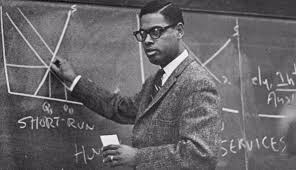
… is from pages 297-298 of the late UCLA economist William Allen’s excellent 1989 collection of the transcripts of his radio addresses, The Midnight Economist; specifically, it’s from Allen’s August 1986 address “Surpluses and Trade”:

Exported goods embody valuable resources. There would be no point in producing these goods if there were no anticipated market for them, and they are to be produced and sold, not for the sheer love of the activity, but in order to buy foreign goods.
DBx: Yes. Exporting (or, more generally, producing) is a means; the end is importing (or, more generally, consumption).

This reality is one reason why I dislike the term “export-led growth.” A people who genuinely grow wealthier through exporting grow wealthier only insofar as their exports enable these people to import more in order, in turn, to increase their consumption beyond what that consumption would be absent the exporting. The economic growth is, at bottom, made possible by increased per-person production. The fact that in some countries an especially large proportion of that increased production is exported in exchange for imports in no way means that governments that artificially arrange to increase their citizens’ exports will thereby necessarily increase their citizens’ prosperity.

People sell in order buy; people export not for the sake of exporting but, rather, in order to import. People do not buy in order to sell; people do not import in order to export.

…..

Pictured here is Bill Allen (1924-2021).

{ 0 comments }

A Case Against the Case For Banning Surrogate Motherhood

Here’s a letter to the Wall Street Journal.

Editor:

Lois McLatchie Miller is able to conclude that surrogate motherhood is unethical because she looks at only one side of the moral ledger (“The Case for Banning Surrogate Motherhood,” November 20). Of course some abuses occur in surrogacy arrangements, just as some abuses occur in all human arrangements. Some people get ripped off buying cars; some employees steal from their employers; some wives are battered by their husbands; some children are abused by their parents. No human arrangement is free of instances of abuse. Ms. Miller tells us nothing about the frequency or severity of the abuses that she pins on surrogacy. The only factual detail she shares is of a projection that “the global surrogacy market will exceed $129 billion by 2034.” So what? By 2034 the amount of money Americans alone will spend on fertility treatments will be in that same ballpark. No relevant meaning is conveyed by such information about total spending on surrogacy.

Additionally, Ms. Miller is blind to surrogacy’s upsides. Why disregard the joy experienced by infertile couples who surrogacy enables to fulfill their dream of having children? Why ignore the happiness of many people who, through surrogacy, gain siblings they otherwise would never know? Why look past the ability of women for whom pregnancy is especially risky to protect their health by using surrogate mothers? Why discount the ability of other women to improve their lives by serving as surrogate mothers? And why overlook the very existence of those children who are given life only because of surrogacy?

Surrogacy arrangements are voluntary. As such, in a free society these should not be outlawed unless a compelling moral case is made against them or strong and unambiguous evidence shows them to unleash net harm. Ms. Miller’s case against surrogacy doesn’t begin to meet this standard.

Sincerely,
Donald J. Boudreaux
Professor of Economics
and
Martha and Nelson Getchell Chair for the Study of Free Market Capitalism at the Mercatus Center
George Mason University
Fairfax, VA 22030

{ 0 comments }

Adam Smith Would Not Endorse Trump’s Tariffs

Here’s a note to a new correspondent.

Mr. Lee:

Thanks for alerting me, a Twitterless economist, to Larry Elder’s mention of my essay in which I discuss Adam Smith’s exceptions to the case for a policy of free trade. I’m afraid, however, that you misinterpret that essay.

Contrary to your impression, I most certainly do not believe that “Smith generally would approve of President Trump’s tariffs.” Indeed, I’m quite sure that Smith would strongly oppose these tariffs.

First, Smith insisted with crystal clarity that trade balances are no cause for government obstruction of trade. “Nothing, however,” Smith declared, “can be more absurd than this whole doctrine of the balance of trade.” Yet U.S. trade ‘imbalances’ have long been, and remain, the principal phenomena that Trump points to as justifying protective tariffs.

Second, if you read my essay you’ll discover that two of the four supposed ‘exceptions’ aren’t really exceptions. In one case, Smith argued simply for taxing imports at the same rate as domestically produced goods are taxed. In a second case, Smith suggested that, in order to give workers time to adjust, tariffs should sometimes be removed gradually rather than immediately – but nevertheless removed and, better yet according to Smith, never imposed in the first place.

A third exception is imposing tariffs to pressure foreign governments to lower their tariffs. Smith treated this possibility as largely theoretical – as maneuvers inevitably to be carried out in each case by what he described as an “insidious and crafty animal, vulgarly called a statesman or politician,” and highly unlikely in practice to promote domestic economic growth.

The fourth and strongest exception is the one for national security. But even here Smith was clear that, however appropriate protection might be in some cases to strengthen national security, such protection imposes a cost on the economy.

For more on Smith’s exceptions, I recommend this short essay by my former student Caleb Petitt.

There’s no doubt in my mind that Adam Smith would find Trump’s protectionism to be horrifying.

Sincerely,
Donald J. Boudreaux
Professor of Economics
and
Martha and Nelson Getchell Chair for the Study of Free Market Capitalism at the Mercatus Center
George Mason University
Fairfax, VA 22030

{ 0 comments }

Some Links

My Mercatus Center colleague Alden Abbott lays out some of the possible broader consequences of Facebook’s victory in the antitrust case against it. Two slices:

A November 18 federal trial court decision favoring Facebook is the first decisive win for a big tech digital platform in a suit brought by the federal government. District of Columbia Judge Jed Boasberg’s opinion striking down the Federal Trade Commission’s monopolization suit against Facebook appears sound and well-reasoned and will be hard to overturn on appeal.

The decision also may have broader implications for U.S. antitrust suits brought against high tech firms. It stresses how tech markets have changed significantly in recent years, making restrictive market definitions, such as the one put forth by the FTC here, hard to defend. Antitrust cases that retard innovation by focusing on narrow conditions at one point in time may miss the bigger economic picture.

…..

While market definition was key to the court’s ultimate holding, additional discussion by Judge Boasberg shed light on the fact that Facebook’s activities had generated substantial economic benefits.

Judge Boasberg found it “impossible to believe that consumers would prefer the versions of Instagram and Facebook that existed a decade ago to the versions that exist today,” implying that product improvements driven by competition have benefited consumers.

Indeed, economic research indicates that “digital goods” associated with platforms have brought forth enormous levels of new consumer welfare (the key goal of antitrust according to leading scholars and the Supreme Court). One estimate by leading scholars found that digital goods bestowed trillions of dollars in annual benefits to consumers.

The scale of the economic benefits of platform innovation for the American economy merit being highlighted. U.S. courts overseeing digital markets cases may be finally awakening to the fact that antitrust ignores beneficial changes in market conditions at its peril. Bringing costly antitrust suits that retard innovation is not MAGA. Federal antitrust enforcers may want to take note of this.

Also writing wisely about antitrust is Mark Jamison. A slice:

Antitrust enforcement in the United States too often fails to deliver what it promises. The Justice Department and Federal Trade Commission have won historic cases—the breakups of Standard Oil and AT&T, and most recently the ruling against Google’s search practices—but such victories rarely enable commerce or bring benefits for consumers. The reason is simple: Antitrust enforcers are fighting the wrong battles. They focus on the moments they can easily see, such as present and past market shares, rather than on how industries evolve. By the time regulators finish their legal battles, the technologies and markets have already moved on.

Mani Basharzad asks: “What is wrong with economics education?” Two slices:

How many times does an undergraduate economics student hear the name “Hayek” in his or her courses? The answer, in most programs, is close to zero.

This is surprising. Friedrich Hayek remains one of the most cited Nobel laureates in economics—second only to Kenneth Arrow in mentions and citations in Nobel lectures, according to research from King’s College London. His ideas on the knowledge problem and the economic calculation debate are fundamental to understanding the limits of central planning and the role of markets.

And yet, in most classrooms, Hayek’s name never appears. Why? Because economics education today is not primarily designed to train economists but to produce social engineers.

This point was made forcefully by another Nobel laureate, James Buchanan. In his 1964 presidential address to the Southern Economic Journal, Buchanan asked the deceptively simple question: “What should economists do?” His answer was not about what theories to teach but about how to teach. He argued that the modern economics curriculum had been captured by a vision of training future policymakers to manage society rather than cultivating economists as scientists who study spontaneous order and social processes.

…..

Students learn to solve equilibrium equations, calculate shifts in demand and supply, and memorize models of optimization. Rarely are they asked to reflect critically on whether these frameworks capture the world they are meant to describe.

As Austrian economist and professor at New York University Mario J. Rizzo recently noted in the Financial Times, “The students were given, mainly or only, problem-sets of a completely mathematical nature. […] There were no questions involving critical reflection on the ideas or frameworks taught.”

This approach instills in students the illusion that social problems can be solved by finding “optimal solutions.” In that worldview, markets are seen only in terms of failures—problems that supposedly require government correction—while genuine market solutions are ignored.

But such a mindset directly contradicts the wisdom of classical liberal economics. Thomas Sowell once remarked that, in the real world, “there are no solutions, only trade-offs.” Social life is not about perfection; it is about making choices under scarcity, uncertainty, and ignorance. The central task of economics is not to identify perfect outcomes but to understand how institutions help us cope with imperfection.

[DBx: Buchanan’s address was in 1963, although it was published in a 1964 number of the Southern Economic Journal. Also, at George Mason University, economics continues largely to be taught as Buchanan urged.]

GMU Econ alum Jeremy Horpedahl reports that today “one-third of US families earn over $150,000” – a reality that is not mainly due to the rise in two-income households. (HT Arnold Kling)

In this letter to the Wall Street Journal, Robert Poole urges the de-politicization of U.S. air-traffic control:

Andrew Langer counsels that we should fund air-traffic control during a shutdown, not privatize it (Letters, Nov. 12). Fair enough, but there’s another sensible option. Keeping ATC in the federal budget makes it vulnerable to shutdowns and political micromanagement, which has prevented the FAA from retiring aging technology and sensibly consolidating and modernizing its facilities. The model now providing depoliticized ATC in nearly 100 countries is an aviation public utility, funded entirely by system fees and charges. Only four of these are “private” in some sense; the vast majority are government utilities like our Tennessee Valley Authority. Its revenues come from its customers paying TVA for what they use—exactly as airlines and business jets do worldwide with ATC utilities.

Christopher Freiman busts the zombie myth that much of the blame for Americans being on the government dole belongs to employers such as Walmart and Amazon.

My intrepid Mercatus Center colleague, Veronique de Rugy, hopes that Congress will act responsibly to deal with the looming funding crises for Social Security and Medicare. A slice:

According to the Congressional Budget Office, maintaining all Social Security and Medicare benefits by borrowing would add roughly $115 trillion to the deficit over the next thirty years. That’s $70 trillion in shortfalls and the rest in interest payments. On a real basis, using a 2% real discount rate, the present value of that $70 trillion is on the order of $40 trillion—greater than the current $38 trillion national debt. That is also the same amount by which income taxes would have to rise in order to avoid borrowing, and the same present value of the later, larger income taxes that would be needed to eventually repay added debt.

The danger, of course, is that Congress will borrow and then be unable or unwilling to repay such a massive amount of debt. A debt crisis will eventually erupt, leading to default or inflation. History has no shortage of examples of other countries unsustainable social spending causing debt collapses. It can happen here. And when people see that event coming, we will see a flight from Treasury debt and inflation in its anticipation.

{ 0 comments }

Quotation of the Day…

… is from page 192 of Thomas Sowell’s 1993 collection, Is Reality Optional?:

Back in my old neighborhood, there was a special contempt for the kind of guy who was always trying to get two other guys to fight each other. Today, it is considered a great contribution to society to incite consumers against producers, tenants against landlords, women against men, and the races against each other.


{ 0 comments }

Hydraulic Keynesianism Is Bad Economics

Here’s a letter to Foreign Affairs.

Editor:

Michael Pettis writes as if humanity’s chief economic problem is that we’re too rich – that we’re so abundantly awash in goods and services that the demand to purchase these outputs is inadequate (“How to Fix Free Trade,” November 17). As such, he insists that governments’ main economic duty is to protect its citizens from receiving from foreigners more goods, services, and capital than those citizens send to foreigners.

Pettis peddles hydraulic Keynesianism. He writes of some countries (including the U.S.) being “forced” to “absorb” capital and goods from other countries as if national economies are distinct entities connected to each other by a series of tubes through which flow savings and goods. In this bizarre mechanical view, when, say, the Chinese save ‘too much’ and produce more than they consume, the excess must “flow” somewhere. For a variety of reasons, most of this excess today “flows” into America. We Americans find ourselves with more capital and goods than we ourselves produce.

Poor us, having to “absorb,” year after year, lots of capital and goods from abroad.

Absent from Pettis’s analysis are microeconomic factors that better explain the persistence of U.S. trade deficits. Despite its imperfections, America remains an attractive place for foreigners to choose to invest. This attractiveness, in turn, prompts foreigners to choose to save more than they would otherwise. Similarly, the production of tradable goods outside of America is done largely because non-Americans – mostly led by price signals and the desire to earn profits – choose to produce the goods that they then choose to offer for sale to Americans.

Americans also choose. Every import bought by an American is one that an American chooses to buy, presumably because the price is right. Every asset sold by an American is one that an American chooses to sell, presumably because the price is right. To write, as Pettis does, of imports, exports, and savings flowing from country to country as if these are akin to hydraulic fluids mindlessly moving from higher-pressure to lower-pressure locations is not to do serious economics.

The global trading system has many problems, including mercantilist policies pursued by both Beijing and Washington. But these policies, contrary to Pettis’s assertions, are problems largely for the countries that practice them. If there is excess production in China, that’s a problem mostly for the Chinese. If there are excess savings in Germany, that’s a problem mostly for the Germans.

Pettis’s attachment to hydraulic Keynesianism prevents him from understanding the realities of global trade and investment.

Sincerely,
Donald J. Boudreaux
Professor of Economics
and
Martha and Nelson Getchell Chair for the Study of Free Market Capitalism at the Mercatus Center
George Mason University
Fairfax, VA 22030

{ 0 comments }