≡ Menu

Quotation of the Day…

… is from page 9 of the original 1960 Harvard University Press edition of Frank Knight’s collection of lectures, delivered in 1958 at the University of Virginia, titled Intelligence and Democratic Action:

Man is an opinionated animal, and contentious, as well as romantic (uncritical) in forming opinions. This is true in all fields of knowledge, but especially in those dealing with people and institutions, and most notably with respect to value judgments. In consequence, the need for intelligence in a democratic society confronts dis-harmony within human nature.

DBx: So true.

Economics reveals to those who truly learn it vast amounts of phenomena unseen to those who don’t learn economics. Because of this reality, those persons whose material welfare or ideological attachments are furthered if others remain blind to phenomena revealed by economics have a positive interest in denying the reality of the unseen phenomena.

And because remaining blind is easier than exerting the effort to see past the fogs and mirages to what exists over the horizon, those whose welfare or ideological attachments are promoted by others remaining blind to phenomena revealed by economics have little trouble convincing their fellow human beings that economists who are forever pointing out the unseen are to be ignored or even, on occasion, demonized.

{ 0 comments }

Bonus Quotation of the Day…

… is from page 233 of the 1984 Penguin Classics edition of Alessandro Manzoni’s great mid-1820s novel, The Betrothed (I Promessi Sposi), translated by the late Bruce Penman; the character Antonio Ferrer is deputy governor of Milan during a time of bad grain harvests:

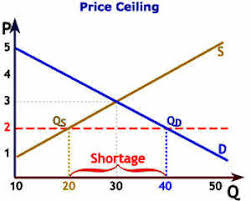
Ferrer saw, as anyone could see, that it is highly desirable that there should be a fair price for bread. He also thought – and this was where he went wrong – that an order from him could do the trick. He fixed the price of bread at the level that would have been right with corn at thirty-three lire per measure. But it was really being sold at up to eighty. Ferrer was behaving like a lady of a certain age, who thinks she can regain her youth by altering the date on her birth certificate.

DBx: Monetary prices and wages set on markets are not arbitrary.

A government can indeed prevent people from transacting at nominal prices and wages above those stipulated by the government. A government can indeed prevent people from transacting at nominal prices and wages below those stipulated by government. But no government, in doing so, thereby transforms the market values of goods and services into those that correspond to the government-enforced maximum or minimum prices and wages. (Actually, quite the opposite occurs.)

People who believe that anti-price-gouging legislation helps low-income buyers, and that minimum-wage legislation helps low-income workers, do indeed express a belief that is the intellectual equivalent of the belief that a person can become younger merely by scratching out from his or her birth certificate the true date of birth and scribbling in an arbitrarily chosen later “date of birth.”

This belief becomes not a smidge more reasonable if it is held or expressed by people who call themselves “Progressive” and who boast about “following the science.”

{ 0 comments }

Some Non-Covid Links

My intrepid Mercatus Center colleague Veronique de Rugy isn’t impressed with Mitt Romney’s so-called “Family Security Act.” A slice:

However, this universality creates other work disincentives. For example, experiments with the universal basic income provide evidence that unconditional cash payments can be detrimental to beneficiaries’ employment. This undermines the importance of work as a pathway out of poverty for some low-income Americans and their children. In fact, Scott Winship at the American Enterprise Institute has made a powerful case that the work requirements included in welfare reform of the 1990s played an important role in reducing child poverty.

Jon Sanders is rightly grateful for being “price-gouged” (so-called).

Wall Street Journal columnist Dan Henninger is appropriately critical of the insidious tyranny lurking in Progressives’ notion of “our democracy.” A slice:

So be it, until the 2022 midterms. But how does voting to demote the election in a Georgia congressional district, no matter how freakish its representative’s views, square with “our democracy”?

Within days of that House vote, an inevitable corollary event arrived, with a New York Times columnist suggesting that in light of “our [that word again] national reality crisis,” some academics were urging the creation of a federal “reality czar,” whose office would identify and presumably correct false thinking.

It may be an exaggeration, but only a small one, to suggest that its proponents want a federal office of reality because they think that virtually all the 74 million Trump voters in 2020 were steeped in QAnon-like falsity. What an extraordinary juncture in U.S. politics. If you believe that everything your opponents think is false, and that everything you believe is the “truth” (apologies again for the oh so slight exaggeration), this surely is a form of insanity.

Wall Street Journal columnist Jason Riley wonders if teachers’ unions have finally overplayed their hand. A slice:

According to the most recent data from School Digger, a website that aggregates test score results, 23 of the top 30 schools in New York in 2019 were charters. The feat is all the more impressive because those schools sported student bodies that were more than 80% black and Hispanic, and some two-thirds of the kids qualified for free or discount lunches. The Empire State’s results were reflected nationally. In a U.S. News & World Report ranking released the same year, three of the top 10 public high schools in the country were charters, as were 23 of the top 100—even though charters made up only 10% of the nation’s 24,000 public high schools.

We are told constantly by defenders of the education status quo that the learning gap is rooted in poverty, segregation and “systemic” racism. We’re told that blaming traditional public schools for substandard student outcomes isn’t fair given the raw material that teachers have to work with. But if a student’s economic background is so decisive, or if black students need to be seated next to whites to understand Shakespeare and geometry, how can it be that so many of the most successful public schools are dominated by low-income minorities?

What is equity?

As Ryan Bourne reports, the absurdity of the arguments made in support of minimum wages knows no limits.

Speaking of minimum wages, here’s a brand new – and very important – paper on the subject from economist Jeffrey Clemens. A slice:

I show that margins including nonwage job attributes can have first-order implications for analyses of minimum wages. In models that account for such factors, predictions for the effects of minimum wages on unemployment and worker welfare can, perhaps surprisingly, be reversed from our basic intuitions. I also show how these results can be illustrated through minor extensions to basic diagrams of labor supply and demand.

George Will justly criticizes Chuck Schumer’s and Elizabeth Warren’s proposed welfare for the well-to-do. A slice:

One drama of Joe Biden’s infant presidency was foreshadowed 13 months ago in Iowa when a rival for the Democratic presidential nomination, Sen. Elizabeth Warren of Massachusetts, answered a question. Her “a program for every problem” repertoire included as much as $50,000 of forgiveness for indebted students or former students from households making less than $100,000, declining to zero for $250,000 households. An Iowan said to her:

“My daughter is getting out of school. I’ve saved all my money [so that] she doesn’t have any student loans. Am I going to get my money back?”

Warren: “Of course not.”

Iowan: “So you’re going to pay for people who didn’t save any money, and those of us who did the right thing get screwed?”

Of course: Activist government usually serves those who know how to activate it — relatively affluent and articulate complainers.

{ 0 comments }

Some Covid Links

The White House – impressed by the apparently shocking new discovery that pathogens mutate – is talking about imposing restrictions on domestic travel within the United States…. Phil Magness accurately identifies such talk as an impeachable offense. (Why are so few people speaking out against this madness and tyranny?!)

Those of you who, astonishingly at this point, continue to doubt that the excuses for lockdown continue to morph ever-more outrageously  – and into ever-greater tyranny – might want to read this item about what was once a free country

and you might want to listen to this short interview with British MP Charles Walker.

Guy de la Bédoyère weighs in. A slice:

I freely admit that of late I have tried to adopt a more conciliatory tone, frustrated by the polarisation of the debate about how to get out of this crisis and the apparent inability of people to listen to each other. But with the news getting worse every day, vaccines gradually diminishing as an escape as scientists reel back at the earth-shattering discovery that viruses mutate, and lockdowns turning into a permanent policy in the fantasy world of Zero Covid (now they are necessary to help the fight against mutations), I am close to the point of giving up.

Living in Britain in 2021 is like cowering in a submarine while enemy depth charges explode all around you. You daren’t rise to the surface and instead just sink lower and lower. The only difference is it’s our own Government dropping them.

Reason‘s Robby Soave rightly scolds long-time enemy of education Randi Weingarten for spreading disinformation about Covid-19.

Jeffrey Tucker lists some of the people who wanted, or at least were unlikely to opposed, the tyrannical Covid lockdowns.

Back in November, Matt Kibbe spoke with Ivor Cummins.

Here’s the video of Phil Magness’s and Jeremy Horpedahl’s recent debate over lockdowns. (HT Matt Zwolinski) (And here are some of David Henderson’s thoughts on that debate.)

Phil Kerpen isn’t impressed with the evidence trotted out to support double-masking. (HT Iain Murray)

Here’s the abstract from a new paper by Pinar Jenkins, Karol Sikora, and Paul Dolan:

Every policy has direct and indirect effects of intended and unintended consequences. Policies that require people to stay at home to reduce the morbidity and mortality from Covid-19 will have effects beyond the virus. For example, they will adversely affect mental health and economic prospects for many. They will also affect people’s willingness and ability to access health and social services. This is likely to result in increases in morbidity and mortality from otherwise curable diseases, such as cancer, acute myocardial infarction and stroke. A comparison between Covid-19 deaths prevented and excess cancer deaths caused shows it is possible that preventing Covid-19 deaths through lockdowns might result in more life-years being lost than saved.

Alex Berezow rightly wonders why the CDC’s own new estimate of the number of Covid infections in the U.S. isn’t more widely spoken and written about. Here are his first few paragraphs (original emphasis):

As of now, the official number of COVID cases in the United States stands at roughly 27.1 million. However, the CDC just released its own estimate of the actual number of infections: 83.1 million, more than three times the official count.

If this number is anywhere near accurate, it changes just about everything. Here are some of them:

1) The lockdowns didn’t work as intended. It may be too early to say that lockdowns were an abject failure, but if there really are 83 million infected Americans, we can safely say that the lockdowns didn’t work as intended.

To be fair, it’s far easier to make this statement in retrospect. In the middle of a pandemic, when people are dying left and right, a lockdown looks quite reasonable. In fact, lockdowns may be necessary to prevent overwhelming the healthcare system. So, instead of concluding that we shouldn’t have done any lockdown, the better conclusion is that the lockdown should have been smarter. For instance, perhaps only those who are 65 and older should have been given “stay at home” orders rather than the entire community.

{ 0 comments }

Quotation of the Day…

… is from pages 268-269 of Matt Ridley’s excellent 2020 book, How Innovation Works: And Why It Flourishes in Freedom:

In the ten years from 2008, America’s economy grew by 15 per cent but its energy use fell by 2 per cent.

This is not because the American economy is generating fewer products; it’s producing more. It is not because there is more recycling – though there is. It’s because of economies and efficiencies created by innovation…. [T]hose who say growth is impossible without using more resources are simply wrong. It will always be possible to raise living standards further by lowering the amount of a resource that is used to produce a given output. Growth is therefore indefinitely ‘sustainable’.

{ 0 comments }

Am I a Guinea Pig in an Evil Scientist’s Experiment?

For many months now I’ve felt as if I am a guinea pig in a scientific experiment. Some unseen scientist, likely evil, is studying what happens to human beings if a relatively small number of us experience reality in a completely different manner from how the majority of humanity experiences the same reality.

This unseen experimenter has put me into the smaller group. Other American guinea pigs include Betsy and Lyle Albaugh, Jim Bovard, Bryan Caplan, Veronique de Rugy, David Henderson, Dan Klein, Jeffrey Tucker, and Todd Zywicki. But we are tiny in number. Most of our fellow human beings perceive reality very differently from how we guinea pigs perceive it.

We guinea pigs look at the data on Covid and see a dangerous disease, but one whose dangers are reserved largely for the very old and the seriously ill. The danger of this disease to most of humanity is somewhat higher to a large number of people than are the dangers of flus and other illnesses that we routinely confront, but not much higher. We guinea pigs see in Covid no disease that differs categorically from other diseases; we guinea pigs see in Covid nothing remotely approaching an existential threat to humanity.

We guinea pigs are therefore dumbfounded by the mass hysteria over Covid. We simply cannot understand the level of other people’s anxieties and fears. To us, these anxieties and fears are utterly out of proportion, by many magnitudes, to the risk that we perceive is presented by the coronavirus pathogen.

Here’s an example. The economist Jason Briggeman shared on his Twitter account my recent acknowledgement that I, without a second thought, dine indoors at restaurants and remove my mask immediately upon being seated. Here’s the entirety of Dr. Briggeman’s initial tweet:

Good tip from Don Boudreaux today on how to cope with wholesale lockdowns of society: Dine indoors at restaurants without a second thought and remove your mask the moment you’re seated.

To Dr. Briggeman and his Twitter followers, it appears that my actions are so obviously outrageous that they are self-indicting. Simply describing my behavior is sufficient to prove my lunacy. (For the record, I wasn’t offering advice to anyone. I was reporting on my own actions.) Yet to me – not least because the restaurants in which I eat conduct their indoor-dining operations legally and allow the removal of masks when seated – nothing about my actions seems unusual or worthy of criticism. And so I am genuinely flabbergasted by the fact that my actions strike Dr. Briggeman as being speaking-for-themselves outrageous.

Note that one of Dr. Briggeman’s followers wonders if my essay, or my account in that essay, is “real.” Like, wow! Surely no actual human being today dines indoors at restaurants and then publicly admits to doing so!

I understand that many people have risk preferences that differ from mine. And I respect these different preferences. But what I do not begin to understand is why people such as Dr. Briggeman treat actions such as my own not as manifestations merely of different risk preferences but, rather, as actions that are so extremely dangerous and self-destructive that no rational person would dare even to think of performing them. Is my comfort at dining indoors at restaurants so unusual, so bizarre, so self-destructive that I deserve to be publicly scorned?

As I explained in the essay to which Dr. Briggeman takes exception, my reading of the data on Covid tells me that it is not much of a danger to me (which is why I treat Covid as being not much of a danger to me). My reading of the data tells me also that Covid is not remotely close to being the grave danger to the general population that most people believe it to be.

And, frankly, I find it impossible to understand why anyone who looks at the data on Covid fails to see that this disease is magnitudes less dangerous than it would have to be to justify the hysteria and the lockdowns.

Thus I worry that some unseen experimenter has injected me and a relatively few other guinea pigs with some hallucinogen that causes us to perceive reality as differing fundamentally from the perception that most other people have of reality.

Is the unseen experimenter testing to see if, as a result of this powerful hallucinogen, I and my fellow guinea pigs will go insane? I don’t know the unseen experimenter’s purpose, but if he, she, or it is real, I earnestly beg him, her, or it to please stop. Awaken us from this nightmare of a deranged world in which one purpose and one purpose only is treated as worthy – namely, avoiding Covid, just as would homo avoidcovidus!


{ 0 comments }

Some Covid Links

This piece by Simon Elmer is long, but it contains some excellent information. A slice:

As if this weren’t enough to increase the official tally of deaths attributed to COVID-19 far beyond the numbers of UK citizens that actually died of the disease, there’s the additional problem of the changes to how death certificates record the cause of death. On 20 April, the World Health Organisation (WHO) issued the ‘International guidelines for certification and classification (coding) of COVID-19 as cause of death’. These instructed medical practitioners that, if COVID-19 is the ‘suspected’ or ‘probable’ or ‘assumed’ cause of death, it must always be recorded, in Part 1 of the death certificate, as the ‘underlying cause’ of death. In contrast, co-morbidities such as cancer, heart disease, dementia, diabetes or chronic respiratory infections other than COVID-19 should only be recorded in Part 2 of the death certificate as a ‘contributing’ cause. To clear up any confusion this may cause to a doctor filling out the death certificate of an 80-year-old patient who has died of cancer and tested positive for SARS-CoV-2 post mortem, the WHO instructed medical professionals: ‘Always apply these instructions, whether they can be considered medically correct or not.’

(DBx: This last quoted line sounded inaccurate even to my cynical ears, so I checked it out. It’s accurate. This unbelievable demand from the WHO for inaccuracy is outrageous. [Elmer’s link above doesn’t work for me, so I found the April 20th, 2020, WHO document here and downloaded it.])

Here’s the second installment of Sandy Szwarc’s series on how Covid-19 is further fueling the destruction of freedom.

Matt Welch sensibly asks: The Biden “administration wants to spend $200 billion hiring new teachers for closed schools that are bleeding students. What could go wrong?”

Ross Clark is rightly dismayed by the damage that the lockdowns have done, and continue to do, to children.

GMU Econ alum – and cancer survivor – Matt Kibbe writes wisely about our reaction to Covid. A slice:

The same unintended consequences are occurring among people afflicted with cardiovascular disease and cancer, respectively the number 1 and 2 global killers. When all of the “fear porn” articles about the pandemic finally stop driving clicks, we will wake up to the devasting number of unnecessary casualties caused by a lack of attention and treatment against diseases far more dangerous than COVID.

I’m not writing this to judge anyone with a lower tolerance for risk than mine. I’m simply trying to give you a different perspective, hoping you might understand my perspective. Time, for me, is too precious to put life—my journey—on hold. Each day wasted is one I will never get back.

Derek Thompson, of the Atlantic, decries “hygiene theater.” A slice:

But half a year later, Goldman looks oracular. Since last spring, the CDC has expanded its guidance to clarify that the coronavirus “spreads less commonly through contact with contaminated surfaces.” In the past month, the leading scientific journal Nature published both a long analysis and a sharp editorial reiterating Goldman’s thesis. “A year into the pandemic, the evidence is now clear,” the editorial begins. “Catching the virus from surfaces—although plausible—seems to be rare.”

Andrew Codevilla ponders dismounting the Covid tiger. A slice:

Throughout 2020, doctors and hospitals had been encouraged—if not pressured—to label as COVID any set of symptoms that looked remotely like it (explaining why cases of influenza almost disappeared from the United States last year). Now the WHO asked them to make sure that in order for a case to be labeled COVID, symptoms must also match positive results of the standard PCR test.

Simultaneously, the WHO strongly suggested that those who administer the PCR test reduce the number of cycles through which samples are processed. Through 2020, most jurisdictions in America had run samples through 40 cycles. Running that many cycles radically increases the chances of a positive result. This not only inflated the number of “cases,” but it also attributed hospitalizations to COVID-19 rather than to other causes. It led to patients being treated as if they had COVID rather than for what really ailed them, and attributing deaths to COVID that in fact were not.

The new guidance guarantees that, in the coming months, the number of “cases” will drop. The oligarchy will credit the reduction to its wise management. Loosening its grip gradually, it will claim benevolence and prudence. By thus dismounting the COVID tiger, it will try to validate the harm it did over the previous year.

Jeremy Warner warns that the state will not relinquish the massive additional powers that it grabbed in the name of protecting us from a pathogen. A slice:

Anyone dreaming of a return to the old normality can forget it. The disease marks a defining point in history, where lots of things which have been incubating for years finally fall into place and the world shifts decisively on its axis.

Even though not a particularly serious pandemic by some past standards (the plague, Spanish flu), there is an air of fin de siècle about Covid, a shifting of the tectonic plates that tells us that things are never going to be quite the same again. Perhaps the biggest of these changes, and for the more liberally minded among us one of the most worrying, is a much bigger and more intrusive role for the state.

This is often the result of a serious crisis; all of a sudden, the state finds that it is needed, that when all around is frightened chaos, it is the only game in town, and it demands something back in return.

Covid has allowed the Government massively to expand its reach and powers, nationalising great swathes of the economy and, through its social distancing restrictions, reaching deep into the way people live their lives.

Under the guise of the public health emergency, Covid has also – via test and trace and mass vaccination – sanctioned a great leap forward in the surveillance society.

{ 0 comments }

Quotation of the Day…

… is from page 215 of Maxwell Stearns’s 2000 book, Constitutional Process: A Social Choice Analysis of Supreme Court Decision Making (footnote deleted):

In evaluating the merit of an economic model, it is misleading to use terms such as correct or incorrect. Economic models are neither true nor false. Instead, the value of a positive economic analysis depends upon the extent to which the model generates meaningful insights about enigmatic phenomena in the real world. Because economic models are intended to be manageable images of reality, a tension necessarily arises between a model’s descriptive accuracy and its manageability. Developing an economic model, therefore, differs from developing a theory in one of the natural, or “hard,” sciences. While even a single contrary datum can raise questions about the accuracy of a genuinely scientific theory, even the most robust economic models are unable to account for a considerable amount of data. As a result, locating one or more data unaccounted for in an economic model may be of no more value in refuting the model than observing that the model and reality are different.


{ 0 comments }