

David Simon draws important lessons from falling CO2 emissions.
George Leef is correct: minimum-wage legislation is even darker than many of its opponents realize. A slice:
What I think is really dark is the way such politicians look at the consequences of their meddling with the price system. First, those workers who are priced out of the labor market just become clients for other Democratic Party programs and, more importantly, part of their voting base of frustrated people who are easy marks for rhetoric about creating “an economy that works for everyone.”
Second, minimum-wage agitation (“Fight for $15!) implants the idea in people’s minds that the way to get ahead in America is through political activism, not personal improvement. The “progressives” want people to look to government for whatever they want, and minimum-wage laws help do that.
If you consider minimum-wage laws from a public choice perspective, they’re a big success for the people they’re meant to help — leftist politicians.
Casey Mulligan asks a question about minimum-wage legislation that that legislation’s proponents largely ignore. (HT Lyle Albaugh)
George Will decries the State of Illinois’s jaw-dropping attempt to indoctrinate school children there. Here’s his opening:
The worst-governed state — Illinois had triple the population loss of the state with the second-highest out-migration between 2010 and 2020 — is contemplating another incentive for flight. On Feb. 16, a joint committee of the state legislature will decide whether to turn into a legal requirement the State Board of Education’s recommendation that — until a hasty and slight rewording last Monday — would mandate that all public-school teachers “embrace and encourage progressive viewpoints and perspectives.” If the board’s policy is ratified, Illinois will become a place congenial only for parents who are comfortable consigning their children to “education” that is political indoctrination, audaciously announced and comprehensively enforced.
Ethan Yang explains that economic illiteracy is no virtue.
Allysa Ahlgren exposes the bigotry of equity. (HT Mark Perry) A slice:
The philosophy of equity is the true white supremacy — it is rooted in paternalistic condescension, with white people thinking they need to be the saviors of helpless minorities. We see it everywhere. People of color and women are selected for positions of power solely because of their sex and race, which adversely affects minorities who earn positions of power based on merit. This all creates a power dynamic the woke claim to despise — minorities are powerless in their own lives and only whites hold the power to change them.
Here’s part 10 of George Selgin’s important series on the New Deal.
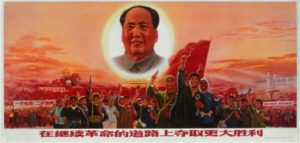 I’m no expert on Soviet or Maoist or Pol-Pottian propaganda, but I have – as, surely, you have – encountered over the years examples of such propaganda in which smiling comrades are shown joyfully marching together – as one, and led by a loving leader – toward some glorious goal. Just as the brainwashed victims depicted in this propaganda happily submit to their enslavement, so too, apparently, do millions of Australians submit to theirs. And the Washington Post publishes an op-ed written by one of them bragging of her comrades’ willingness to behave like well-trained dogs – some eager for snacks as rewards for good behavior, and others fearful of the master’s whip for bad behavior.
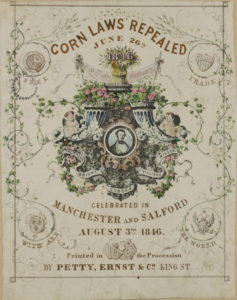 Classical political economy, as taught in the early decades of the nineteenth century, and in England particularly, did capture the minds of the masses. The advocates of classical liberalism were able to present a vision so compelling, so soulful, that it motivated political support for major reform Think of the repeal of England’s Corn Laws, surely a difficult step. Why, after all, ought England to give up protection of its farmers? Only by presenting the larger vision of a free-trade England could the Corn Laws’ opponents prevail with lawmakers. When the reformers succeeded, the repeal’s passage changed the world.
 The great moral tragedy of life is not that people fail to act in accord with their ideals, or with right ideals, but that “love is blind,” that goodness, good intentions and good people so commonly do harm instead of good because of failure to understand social and other conditions and the consequences of actions. In particular, they do not see and face the limitations of life, choose between possible alternatives and find satisfaction in attainable progress at a speed consonant with a reasonable degree of order and security.
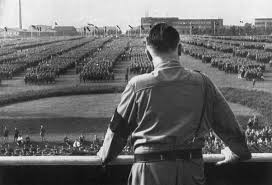 The National Socialist German Worker’s Party was in every respect a grassroots populist party. Party leaders spouted all sorts of socialist prattle about seizing the wealth of the rich. Mein Kampf is replete with attacks on “dividend-hungry businessmen” whose “greed,” “ruthlessness,” and “short-sighted narrow-mindedness” were ruining the country. Hitler adamantly took the side of the trade union movement over “dishonorable employers.” In 1941 he was still calling big-business men “rogues” and “cold-blooded money-grubbers” who were constantly complaining about not getting their way.
