

My GMU Econ colleague Bryan Caplan refreshingly applies sound Coasean thinking to Covid-19.
John Tamny imagines if the virus had never been detected. A slice:
As this column has long stated, the coronavirus is a rich man’s virus. It’s not just that the rich and generally well-to-do had portable jobs that mostly survived the mindless lockdowns, it’s not just that the break from reality we were forced to endure could have only happened in a rich country, it’s also the case that only in a country and world in which the elderly are truly old would the virus have any notable association with death. People live longer today, and they do because major healthcare advances born of wealth creation made living longer possible. We wouldn’t have noticed this virus 100 years ago. We weren’t rich enough.
Toby Young responds to Christopher Snowdon’s critique of lockdown skeptics. A slice:
Sure, there are some peer-reviewed studies published in reputable journals seeming to show that these measures reduce COVID-19 infections, hospital admissions, and deaths. (See here, for instance.) But most of these rely on epidemiological models that make unfalsifiable claims about how many people would have died if governments had just sat on their hands—and some of these models have been widely criticised. The evidence that lockdowns don’t work, by contrast, is not based on conjecture but on observing the effects of lockdowns in different countries. (You can review 30 of these studies here.) What these data seem to show is that the SARS-CoV-2 epidemic in each country rises and falls—and then rises and falls again, although less steeply as the virus moves towards endemic equilibrium—according to a similar pattern regardless of what NPIs governments impose.
Parker Crutchfield and Scott Scheall reveal the limitations of expertise. A slice:
When the phenomena of multiple scientific fields interact, such as when it is necessary to trade off the health costs of a virus against the economic and other costs of a lockdown, policymakers can turn to experts about isolated phenomena. But there are no experts about the interaction of different kinds of phenomena or about the proper weighting of some against others. Policymakers can ask epidemiologists to weigh in on epidemiology, infectious disease specialists to weigh in on infectious disease, and economists to weigh in on economics. But there are no experts about how these subjects interact or how to balance them.
Spot the pandemic year in Scotland.
From Reason: “What Disney Can Teach Us About Covid-19: Lockdowns Fail“.
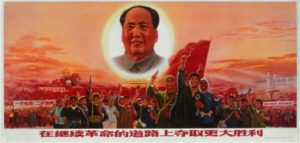 I’m no expert on Soviet or Maoist or Pol-Pottian propaganda, but I have – as, surely, you have – encountered over the years examples of such propaganda in which smiling comrades are shown joyfully marching together – as one, and led by a loving leader – toward some glorious goal. Just as the brainwashed victims depicted in this propaganda happily submit to their enslavement, so too, apparently, do millions of Australians submit to theirs. And the Washington Post publishes an op-ed written by one of them bragging of her comrades’ willingness to behave like well-trained dogs – some eager for snacks as rewards for good behavior, and others fearful of the master’s whip for bad behavior.
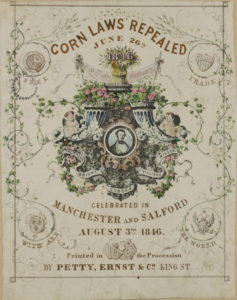 Classical political economy, as taught in the early decades of the nineteenth century, and in England particularly, did capture the minds of the masses. The advocates of classical liberalism were able to present a vision so compelling, so soulful, that it motivated political support for major reform Think of the repeal of England’s Corn Laws, surely a difficult step. Why, after all, ought England to give up protection of its farmers? Only by presenting the larger vision of a free-trade England could the Corn Laws’ opponents prevail with lawmakers. When the reformers succeeded, the repeal’s passage changed the world.
 The great moral tragedy of life is not that people fail to act in accord with their ideals, or with right ideals, but that “love is blind,” that goodness, good intentions and good people so commonly do harm instead of good because of failure to understand social and other conditions and the consequences of actions. In particular, they do not see and face the limitations of life, choose between possible alternatives and find satisfaction in attainable progress at a speed consonant with a reasonable degree of order and security.
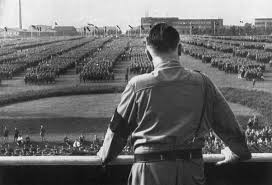 The National Socialist German Worker’s Party was in every respect a grassroots populist party. Party leaders spouted all sorts of socialist prattle about seizing the wealth of the rich. Mein Kampf is replete with attacks on “dividend-hungry businessmen” whose “greed,” “ruthlessness,” and “short-sighted narrow-mindedness” were ruining the country. Hitler adamantly took the side of the trade union movement over “dishonorable employers.” In 1941 he was still calling big-business men “rogues” and “cold-blooded money-grubbers” who were constantly complaining about not getting their way.
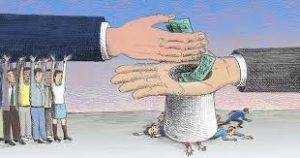 Of course, the private-property, enterprise society is not the only kind with inequalities. And the prospect of a collectivist utopia in which liberty has been foregone but inequalities still persist should give pause even to the most innocent. The fact that the inequalities would reflect preferences of the politbureau instead of producer productivities and market preferences would hardly make them more attractive.
