But do we know that lockdowns actually have the effect that their proponents claim that they have? No, we do not. In fact, the American Institute for Economic Affairs has compiled a list of 29 scientific studies claiming to show lockdowns to be ineffective in reducing the Covid mortality rate. Whilst there may be other studies claiming that lockdowns do work, it is far from certain that they are in fact preventing deaths on the scale predicted.
But even though this increasingly popular school of thought — which holds that we must not return to normal until the virus is completely eliminated within a country — wasn’t explicitly on the billing, its presence was made clear from the outset. In her introductory remarks, the moderator confirmed to the more than 600 registrants and speakers from across the world that “we are here to end Covid through ZeroCovid and CovidZero policies”. More often at the event, held over Zoom and organised by American scientist Yaneer Bar-Yam, speakers preferred to refer to ZeroCovid as an “elimination strategy”.
Yet the purpose of the event was clear: to share evidence and political advice to help campaigners lobby Western governments to abandon any notion of living alongside the virus, and instead to follow the lead of Asia-Pacific nations in aiming to eliminate the disease entirely within their borders. This group is crucially distinct from people who support ongoing lockdown measures to suppress the virus to a level where it is safe to reopen — for ZeroCovid believers, we cannot rest until that level is zero.
On paper, this approach may sound rather sensible. After all, surely we’d all rather live in a world without Covid? Yet having attended last week’s conference, I keep returning to a question that didn’t seem to particularly trouble the speakers: at what cost?
… is from page 288 of Jonah Goldberg’s 2008 book, Liberal Fascism:
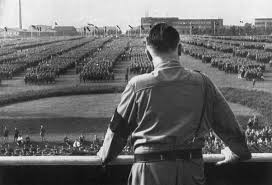
The National Socialist German Worker’s Party was in every respect a grassroots populist party. Party leaders spouted all sorts of socialist prattle about seizing the wealth of the rich. Mein Kampf is replete with attacks on “dividend-hungry businessmen” whose “greed,” “ruthlessness,” and “short-sighted narrow-mindedness” were ruining the country. Hitler adamantly took the side of the trade union movement over “dishonorable employers.” In 1941 he was still calling big-business men “rogues” and “cold-blooded money-grubbers” who were constantly complaining about not getting their way.
DBx: Hitler was truly an evil monster. But he did not rise to power in Germany by portraying himself as an evil monster. He portrayed himself as a well-meaning man who would protect the people from the evil, greed, and negligence of others. And he might even have believed that he was such a man. Many ordinary Germans believed this about him. These ordinary Germans, surely, were nearly all not evil individuals. They were ordinary men and women gripped by the sorts of regrettable but common prejudices and superstitions that have gripped ordinary men and women throughout the millennia.
These prejudices and superstitions, when mixed with simple economic ignorance (itself also the norm), make ordinary people easy prey of those who seek power by promising secular salvation. And if these power-seekers use great charisma to promise to bring that salvation in the form of direct attacks on demons, and on what seem to be the overt consequences of the demons’ action, ordinary people will often be intrigued.
Left or right – it doesn’t much matter. Demonize entrepreneurs who succeed in the market. Demonize big corporations simply because they’re big. (As in “Big Oil,” prefacing an industry name with “Big” is usually sufficient to achieve the demonization.) Demonize differences in monetary incomes and wealth. Demonize foreigners. Demonize imports. Demonize technology.
And for “solutions,” always aim low (when measured by the thoughtfulness of the proposals) while seeming to aim high (when measured by the proposals’ ostensible goals). Demand that incomes of the poor be increased by hiking the minimum wage and seizing income from the rich. Demand that “Big Industry” be broken up by antitrust interventions or regulated in the details of its activities by government officials. Demand that imports be restricted in order to “protect” whatever is most politically salient at the moment – jobs, national security, our traditional way of life, the so-called “industries of the future.” And as of March 2020, reduce people’s risk of dying from some particular pathogen by forcibly keeping people away from each other – and demonize all persons who object to the simplemindedness, the disproportionateness, and the tyranny of this “solution.”
Never propose “solutions” that would not be thought of by a nine-year old child.
No one specifically decided to give the Redditors a smackdown. So everything’s great, then? No! The regulatory environment is not meant to help the little guy. It rigs the system in favor of Big Playerscand incumbent interests. As I have explained elsewhere, “The Dodd–Frank Act creates a regime of discretionary regulation.” It is discretionary because “the regulatory requirements on a nominally private institution vary from firm to firm in ways that are difficult to rationalise or anticipate.” Thus, the regulators are discriminating among individual market participants and applying different rules to different parties even when they have the same legal charter. (That’s how NSCC got classified as “systemically important.”) Not all is for the best in the best of all possible regulatory worlds.
I think we need reform in the regulation of financial markets. But we should reject the error that the problem is “free markets.” When Elizabeth Warren says “It’s a rigged game,” she’s not wrong! But her call for “the SEC to get off their duffs and do their jobs” is asking the fox to do a better job guarding the henhouse. We don’t need moreregulation; we need better regulation. We need the rule of law not only in monetary institutions but in financial markets too. We need to replace the “regulatory leviathan” in financial markets with “a regulatory constitution.”
At this point, I still think zero dollars is the correct amount of stimulus. Based on past experiences, we close the gap by encouraging growth in the private economy, not encouraging growth of government.
But United Teachers Los Angeles, a union adept at ideological opportunism, says: First things first. Among the preconditions for its members’ returning to classroom teaching, for which they are being paid, the UTLA wants a moratorium on authorizing charter schools (these are public schools, emancipated from micromanagement under collective bargaining agreements that unions negotiate with school districts), a state wealth tax, defunding the police and Medicare-for-all.
… is from page 205 of the late UCLA economist William Allen’s superb 1989 collection of the transcripts of his radio addresses, The Midnight Economist; specifically, it’s from Allen’s August 1981 address “Inequality: Economic and Political”:
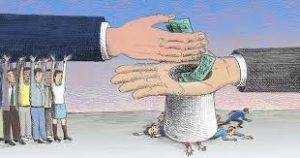
Of course, the private-property, enterprise society is not the only kind with inequalities. And the prospect of a collectivist utopia in which liberty has been foregone but inequalities still persist should give pause even to the most innocent. The fact that the inequalities would reflect preferences of the politbureau instead of producer productivities and market preferences would hardly make them more attractive.
The recent Covid-19 epidemic in the USA is a tragic cautionary tale. The respiratory disease, for everything we know, is similar to a severe, pandemic flu. The symptoms are similar, and the death rate according to the initial estimate of the Centers for Disease Control is between 0.16% and 0.33% (later estimates don’t provide a unique IFR, but a range of different IFR for different age groups show an extremely strong age gradient after 70 and an exceedingly low death rate for those younger than 40). A comprehensive review of all antibody studies done so far by world-renowned epidemiologist John Ioannidis found that the average death rate of Covid-19 is about 0.27%, with some regional variations.
This is certainly higher than the seasonal flu, but very close to a severe pandemic flu, like the one the world experienced in 1957 and 1968 (without doing anything to “tackle” them). Indeed Dr. Anthony Fauci himself, the President’s principal scientific adviser for epidemics, in co-authorship with Dr. Robert Redfield, director of the Centers for Disease Control, published a paper in the New England Journal of Medicine on March 26th of 2020, saying: “If one assumes that the number of asymptomatic or minimally symptomatic cases is several times as high as the number of reported cases the case fatality rate may be considerably less than 1. This suggests that the overall clinical consequences of COVID-19 may ultimately be more akin to those of a severe seasonal influenza (which has a case fatality rate of approximately 0.1%) or a pandemic influenza (similar to those in 1957 and 1968) rather than a disease similar to Spanish flu, SARS or MERS, which have had case fatality rates of 9% to 10% and 36%, respectively.”
An overwhelming majority of people who died of Covid were older than 70 and already had other significant ailments like heart disease, diabetes or obesity. Among children and young people the disease is much less severe than seasonal flu. Additionally, children are far less likely to transmit the virus than older people, which is in stark contrast to the flu, where children are the main spreaders and sufferers.
WHICH of the following is the more reasonable approach a society might take in the outbreak of an epidemic?
· To quarantine the sick and take reasonable precautions to stop those who are identified as vulnerable from contracting the illness.
· To attempt to ‘control the virus’ by preventing millions of healthy people from having contact with other healthy people.
To any society before 2020, it would have been obvious that the first approach is not only logical and proportionate, but the one least likely to have other unintended and highly destructive consequences. However, to my continued astonishment, many in our society not only believe that the answer is the second, but they somehow believe it to be based on established science.
With the Covid-19 pandemic, we have seen the problem Coase discussed unfurl at rapid speed. Lockdowns, business closures, and even deaths were justified by politicians as necessary to contain the pandemic. Enterprising economists jumped at the opportunity to use the market failure model to justify said lockdowns: governmental actions were necessary to bring social costs in line with social benefits.
But these justifications contained the very problem Coase discussed 60 years ago: they ignored the steps people were already taking to limit the spread. Indeed, as my AIER colleague Phil Magness has documented numerous times, many of the models (such as the Imperial College model) explicitly refused to take people’s behavior into context. In a new working paper, Abigail Devereaux, Nathan Goodman, Roger Koppl, and I document other such failures of expert advisors. Thus, the predictable result occurred: policy was too onerous even by its own standards and has failed to achieve its goals.
For individuals, the benefits of exchange cut across political borders – they are not confined within a country. If free trade between the United States and Mexico is detrimental, it should also be detrimental between California and Mississippi. Average wages are 40 percent lower in Mississippi than in California….
The typical protectionist will retort that free trade among countries is different. But why would that be the case? Protectionism against foreigners amounts to a coercive redistribution among the citizens allegedly “protected” – a coercive redistribution analogous to what would be the consequences of forbidding California consumers to buy from Mississippi producers, thereby redistributing income from California consumers to California producers.
DBx: Protectionism artificially increases consumer demand for the outputs of protected producers by intentionally intensifying scarcity in the home country. Protectionism thus reduces overall material wealth in the home country. The typical protectionist, though, misses this reality because he or she mistakes protectionisms’ happy impact on protected producers for its impact on the entire country. (Protectionists are fonts of many fallacies, but the chief one in which they truck is the fallacy of composition.)
Thus, as Pierre above points out, the benefits that protectionism yields for its clients come from its clients’ – its proponents’ – fellow citizens. But these fellow citizens are out of sight of those not fitted with proper ‘economic’ lenses. These fellow citizens and their suffering are thus out of protectionists’ minds. It’s easy to plunder unseen victims and heartwarming to witness the joy that is experienced by those who receive the resulting booty.
Conservatism has no more urgent task than that of convincing the country that judicial deference often is dereliction of duty, and that an energetically engaged judiciary is necessary lest, in Justice Robert Jackson’s words, “the lights go out.”
DBx: Indeed (although what George Will calls “conservatism” is what I call “liberalism”).
…..
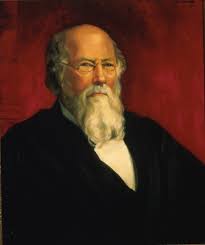
Pictured above is U.S. Supreme Court Associate Justice Stephen J. Field. Nominated in 1863 for the Supreme Court by President Abraham Lincoln, Field was one of the finest jurists ever to serve in that body.


 The National Socialist German Worker’s Party was in every respect a grassroots populist party. Party leaders spouted all sorts of socialist prattle about seizing the wealth of the rich. Mein Kampf is replete with attacks on “dividend-hungry businessmen” whose “greed,” “ruthlessness,” and “short-sighted narrow-mindedness” were ruining the country. Hitler adamantly took the side of the trade union movement over “dishonorable employers.” In 1941 he was still calling big-business men “rogues” and “cold-blooded money-grubbers” who were constantly complaining about not getting their way.
 Of course, the private-property, enterprise society is not the only kind with inequalities. And the prospect of a collectivist utopia in which liberty has been foregone but inequalities still persist should give pause even to the most innocent. The fact that the inequalities would reflect preferences of the politbureau instead of producer productivities and market preferences would hardly make them more attractive.
 For individuals, the benefits of exchange cut across political borders – they are not confined within a country. If free trade between the United States and Mexico is detrimental, it should also be detrimental between California and Mississippi. Average wages are 40 percent lower in Mississippi than in California….
 Conservatism has no more urgent task than that of convincing the country that judicial deference often is dereliction of duty, and that an energetically engaged judiciary is necessary lest, in Justice Robert Jackson’s words, “the lights go out.”
